
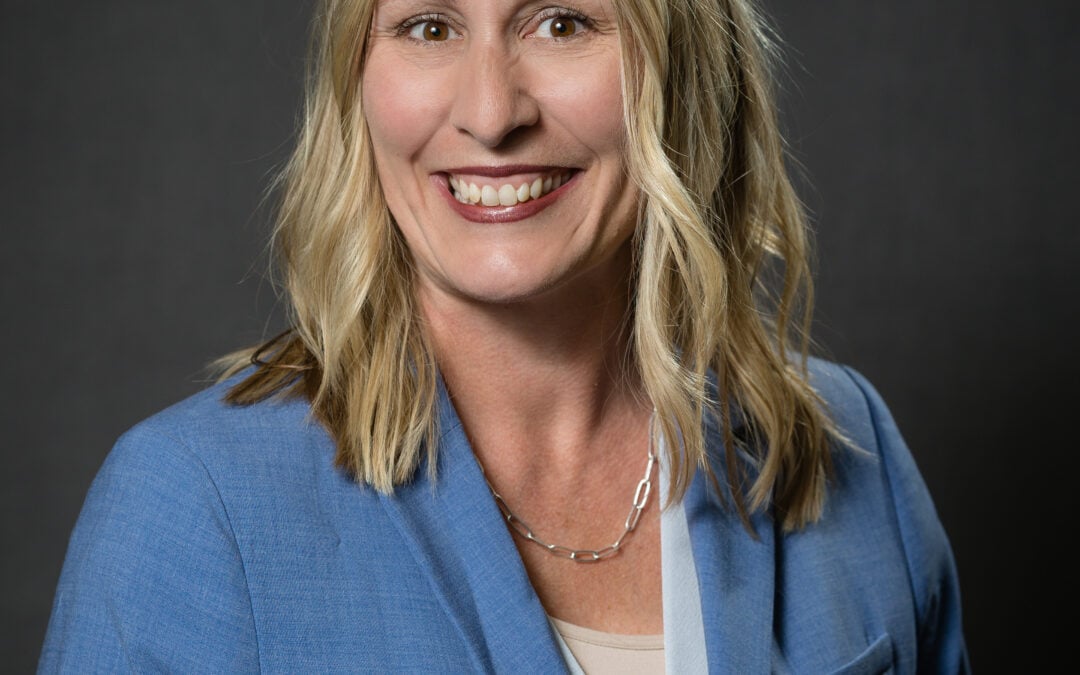
At OneHealth Nebraska, our strength comes from the providers who lead with passion and heart. This month, we are proud to spotlight one of our physicians and dedicated members of the OneHealth Nebraska IPA Board of Directors, Dr. Rachel Blake.
Growing up in Scottsbluff, Nebraska, Dr. Rachel Blake always dreamed of caring for animals. “I always wanted to be a veterinarian,” she says with a laugh, highlighting her early passion for animals.
Her natural aptitude for science and learning was evident from a young age. In high school, she excelled academically, taking Advanced Placement courses at nearby schools—a rare privilege in western Nebraska at the time. While these AP classes gave her a solid foundation for college, they did not affect GPA rankings back then as they do today.
“It actually prevented me from becoming valedictorian,” Blake recalls, noting that many students had perfect 4.0 GPAs without AP courses.
Despite this, her academic talents were recognized, and she was chosen for the prestigious RHOP (Rural Health Opportunities Program) at Chadron State College. This program offers rural Nebraska students a pathway into medical careers.
It is noteworthy that her decision to pursue a medical career was not universally supported. She recalls that her counselor recommended nursing as an alternative to becoming a physician. Nevertheless, with strong encouragement from her mother and confidence in her own aspirations, she chose to follow her ambition. She enrolled at Chadron State through the RHOP program with the intention of becoming a doctor. Although she had previously considered veterinary school, she ultimately chose human medicine, influenced in part by the considerable expenses associated with veterinary programs.
Upon completion of her undergraduate studies, she headed east to Omaha to attend the University of Nebraska Medical Center. While in medical school, she lived with her grandmother—a living arrangement for which she now expresses deep appreciation.
Dr. Blake, like many medical students, sought financial assistance to support her education. Her career trajectory was notably influenced by a lunchtime presentation. During a pizza lunch hosted by the Army National Guard, representatives outlined a program permitting medical students to serve in the Guard while pursuing their studies. Participants were able to continue their academic activities during the week, engage in periodic training, and receive financial aid. Dr. Blake subsequently enrolled in the program.
Dr. Blake’s first assignment sent her to Iraq, far from home. At first, she says she wasn’t too scared, but everything changed two weeks before she left when a dear friend—who stepped in as a replacement volunteer—lost her life in Iraq. That tragic loss made her fully realize the seriousness of her mission. Although shaken by grief and apprehension, Dr. Blake still went forward with her deployment.
When she arrived, Dr. Blake had little preparation before being thrust straight into her duties. She recalled, “They basically plopped me in Iraq without any formal training about what to expect.” Her commanding officer gave one firm instruction: avoid fraternizing with male soldiers, which even included ordinary activities like playing video games together in the same room. Regardless, Dr. Blake became quite skilled at Halo.
Her role quickly expanded past standard medical work. While caring for injured soldiers, she also became an informal mental health support, counselling young troops wrestling with trauma, anxiety, and emotional turmoil. On several occasions, she stepped in during critical moments to help very young service members as they faced challenges far beyond their usual experiences.
Mortar shells frequently exploded near her tent every day. On her last day in Iraq, she and a colleague were waiting for their flight home, sipping what she called “crappy cups of coffee,” when a malfunctioning mortar round detonated right above their heads. Reflecting on the incident, she recalled saying, “That would have sucked if we died. We weren’t even doing anything—just drinking crappy coffee and waiting to go home.”
Following her return from deployment and completion of training, Dr. Blake commenced her medical career in Ord, Nebraska. In rural healthcare settings, practitioners frequently assume broad responsibilities. Dr. Blake managed all aspects of care, including emergency, inpatient, and outpatient services, while always remaining on call. Although she valued the sense of community in Ord, after a couple of years, Dr. Blake and her husband chose to relocate to Lincoln with their daughter, marking the beginning of a new phase in both her professional and family life.
Shortly after their move back to Lincoln, the couple was surprised to learn she was expecting twins. The pregnancy came with complications, adding new challenges as she balanced a medical career and caring for their young daughter. After the boys’ arrival, life became a hectic mix of newborn routines, patient care, and family duties. Tragically, only four months later, one of their twin sons passed away from RSV.
The loss devastated them. Within months, Dr. Blake was faced with profound grief, all while continuing her work as a physician, parenting her daughter, and nurturing her surviving son. She eventually returned to her job, learning how to live with both sorrow for their loss and gratitude for the loved ones around her.
Like so many experiences in her life-from military deployment to rural medicine- the loss deepened her empathy for the people she cares for every day. Today, those experiences continue to shape the way she practices medicine, reminding her that behind every patient is a story, a family, and sometimes a struggle that no one else can see.
Through every chapter of her life – from growing up in western Nebraska, to serving in a war zone overseas, to navigating profound loss – Dr. Blake has remained deeply committed to caring for others. That commitment also extends to the way she believes medicine should be practiced.
As a primary care physician, Dr. Blake is a strong advocate for independent medicine – believing that physicians who are rooted in their communities are better positioned to truly care for the people they serve. Independent practices, she believes, allow doctors to focus on what matters most: relationships with patients.
That belief is one of the reasons she became involved with OneHealth Nebraska. Today, she serves not only as a member physician but also a member of the OneHealth Nebraska IPA Board of Directors. Her voice on the board reflects the same qualities that have defined her journey: resilience, compassion, and a deep commitment to service. From rural Nebraska classrooms to the front lines of Iraq, and now to exam rooms and boardrooms helping shape the future of healthcare, Dr. Blake continues to live out the mission that first led her into medicine – to care for others, wherever they are, and however they need it most.